Keep the Heroes Out: reading the dungeon before the heroes do
A co-operative dungeon defence where the board state changes every turn. How to keep the treasure, traps and monster positions readable, and what new groups get wrong.
Keep the Heroes Out inverts the usual dungeon crawl: you are the monsters, and a party of heroes is working its way in to take your treasure. It is a co-operative puzzle with a timer, and like most such games the difficulty comes from reading a fast-changing board correctly rather than from any single rule.
The treasure is the game, so make it look like it
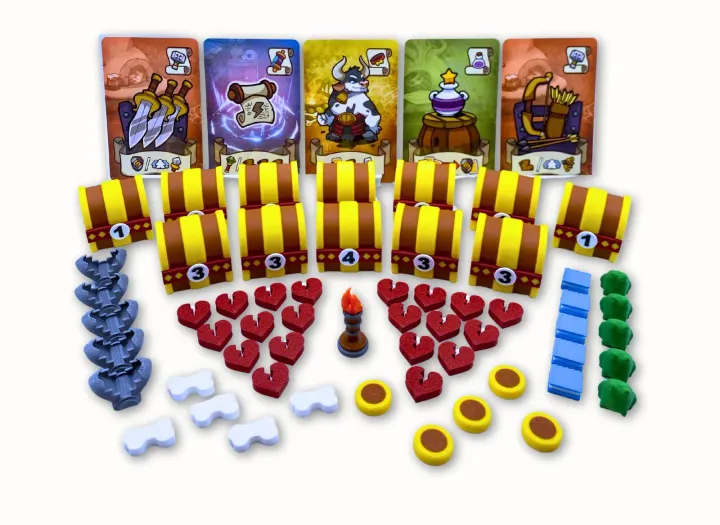
Everything in Keep the Heroes Out is measured against one question: can the heroes reach the loot and get out. The published treasure markers are cardboard discs, which is functional and does the theme no favours at all.
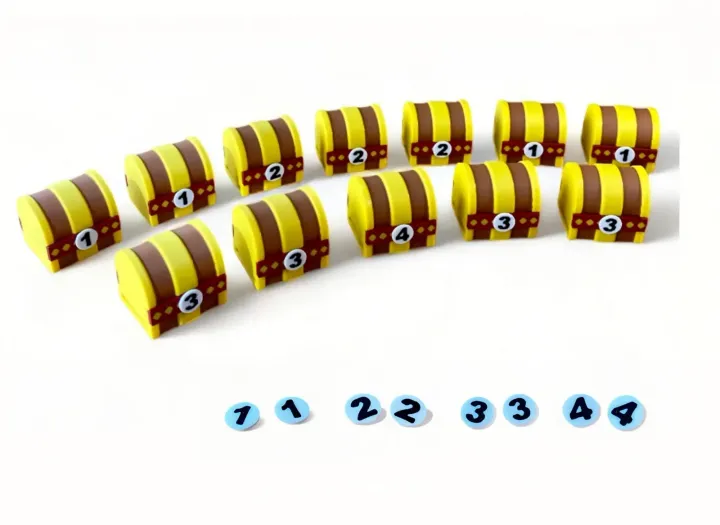
More practically, treasure is the piece you want to be able to count without looking closely. A stack of chests tells you at a glance how much is still worth defending; a stack of discs tells you there is a stack of discs.
Track hero movement, not hero position
New groups plan around where the heroes are. Experienced groups plan around where the heroes will be in two turns, because by the time a hero is in a room, your options for that room have mostly closed.
Say the projected path out loud during planning. It converts a private calculation into a group one and catches the routing mistakes, which are the expensive ones.
Keep spent and unspent visibly separate
Like most games with an action economy, the errors cluster around what has already been used this round. Monsters that have acted, traps that have triggered, abilities that are spent.
Whatever convention you adopt — rotating a piece, moving it to a corner of its room, laying it flat — apply it consistently and physically. A convention everyone remembers is worse than a convention everyone can see.
The doors and corridors are the actual board
It is easy to focus on rooms and forget that the connections between them are what constrain hero movement. When you set up, make sure every corridor is unambiguous — a room tile pushed half a centimetre out of place creates a connection that does not exist, and nobody notices until it matters.
This is worth a ten-second check at setup and after any tile manipulation.
The trap that new groups miss
The most common early loss is not losing treasure. It is spending the early rounds defending the deepest rooms because that is where the treasure feels safest, and discovering that the heroes have taken everything shallow while you were fortifying.
Defend forward. The heroes are on a timer too.
Where upgrades actually help
This is a game with a lot of small markers on a modular board, which is exactly the situation where flat cardboard costs you the most. Chests, monsters and trap markers that differ by height and shape let you take in a room’s state in one look, and in a game where you are projecting two turns ahead across six rooms, that adds up.
The sixty-piece set covers the full range. The twelve-chest set covers the part that matters most, which is the thing everyone is fighting over.