Teaching Heat: Pedal to the Metal in ten minutes
Heat looks like a racing game and plays like a hand-management game. A teaching order that gets new players racing on turn one instead of on lap two.
Heat: Pedal to the Metal is one of the easiest heavy-feeling games to teach badly. The board is a racetrack, the cards are numbers, and if you explain it in the order the rulebook does, new players spend the first lap discovering that the game they are playing is not the game they thought they were playing.
Teach it in this order instead.
Start with the lie
Say this first: “This is not a racing game. It is a hand-management game where running out of good cards is how you crash.”
That single sentence reframes everything that follows. Without it, new players optimise for speed, gear up early, and are then baffled when the game punishes them for something that felt like the whole point.
Then gears, because gears constrain everything
Your gear determines how many cards you play. That is the entire mechanism and it takes fifteen seconds to explain.
The important part is the constraint: you can shift one gear per turn, up or down, without cost. Shifting two costs heat. New players consistently miss that gear changes are gradual, and then find themselves at speed 4 approaching a corner that wants speed 2.
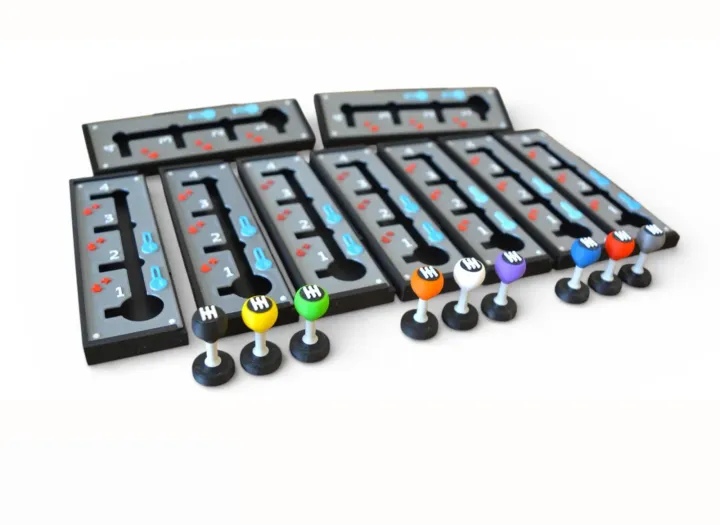
This is also the number the rest of the table needs to see. A gearbox that shows your gear publicly removes a question that otherwise gets asked every turn, and in a five-player game that is a lot of asked questions.
Heat is the resource, not the theme
Heat cards clog your deck. You take them when you overshoot corners, when you shift aggressively, and when you use boost. They do nothing when drawn except occupy a slot.
Explain heat as a debt: you can borrow speed now and pay in dead cards later. Every interesting decision in Heat is a version of that trade, and once players have the framing they make the decisions themselves.
Corners are a speed limit with a fine, not a wall
New players hear “corner” and think “obstacle”. A corner has a maximum speed, and exceeding it costs heat, one per point over — up to a limit, past which you spin.
Frame it as a fine, not a barrier. That gets players taking corners slightly too fast on purpose, which is the correct way to play and much more fun than crawling.
Only then: the track, and only the parts that matter
Lay out the track and point at three things. Where the corners are, where the start line is, and how many laps. That is all a first-time player needs.
Do not explain weather, road conditions, sponsorships, or the legends module in a teaching game. Heat’s base race is complete and good on its own, and every module you add to a first game is a module that gets explained again in the second.
The one thing to demonstrate rather than describe
Play one turn out loud, at half speed, as a group. Gear, cards, movement, corner check. It takes ninety seconds and it replaces about five minutes of explanation, because the sequence is the part that does not survive being described.
Keeping the race readable
Once you are racing, the table needs to know four things at a glance: whose turn, what gear everyone is in, where the speed limits are, and who is where. Three of those are board state that the game presents flat.
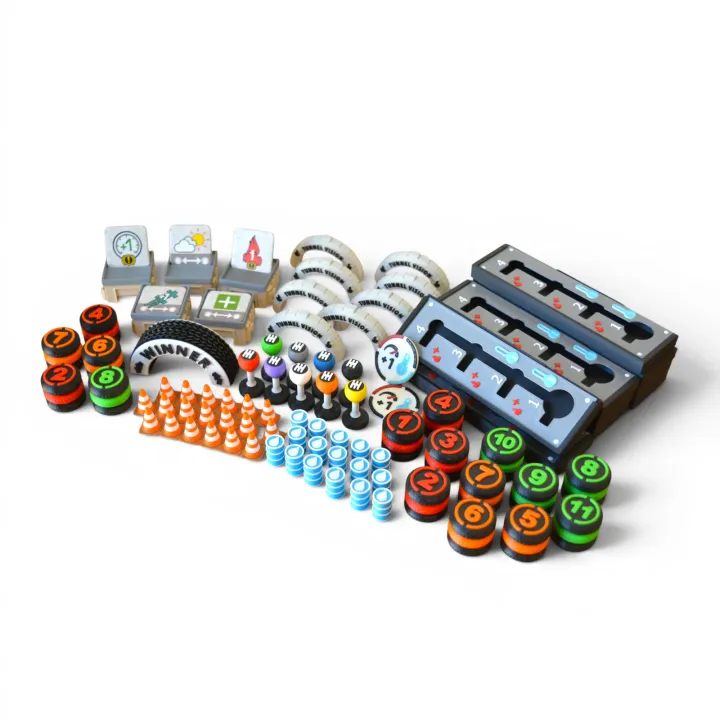
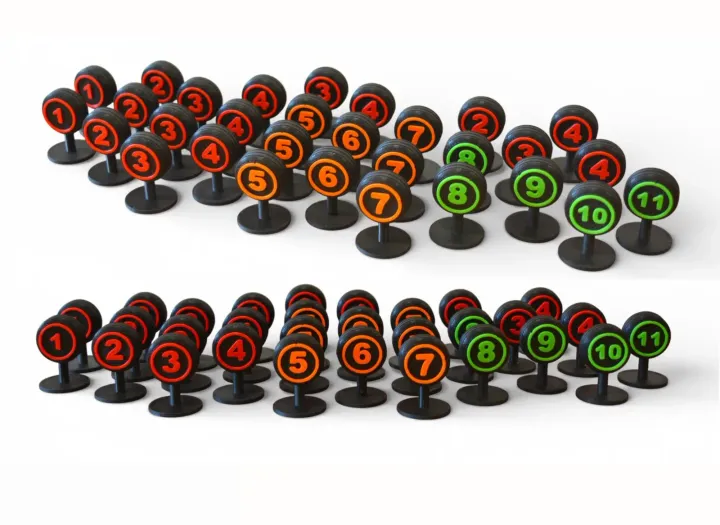
That is the practical case for raising them — gear indicators everyone can see, speed markers tall enough to read down the length of a circuit, shaped road condition tokens instead of printed ones. None of it changes the rules. It removes the questions that interrupt a race that is meant to feel fast.